CS2 Gambling Game Modes
Most CS2 gambling sites run the same core lineup of games. Here is how each
mode works and what to check before you stake skins on it.
Roulette
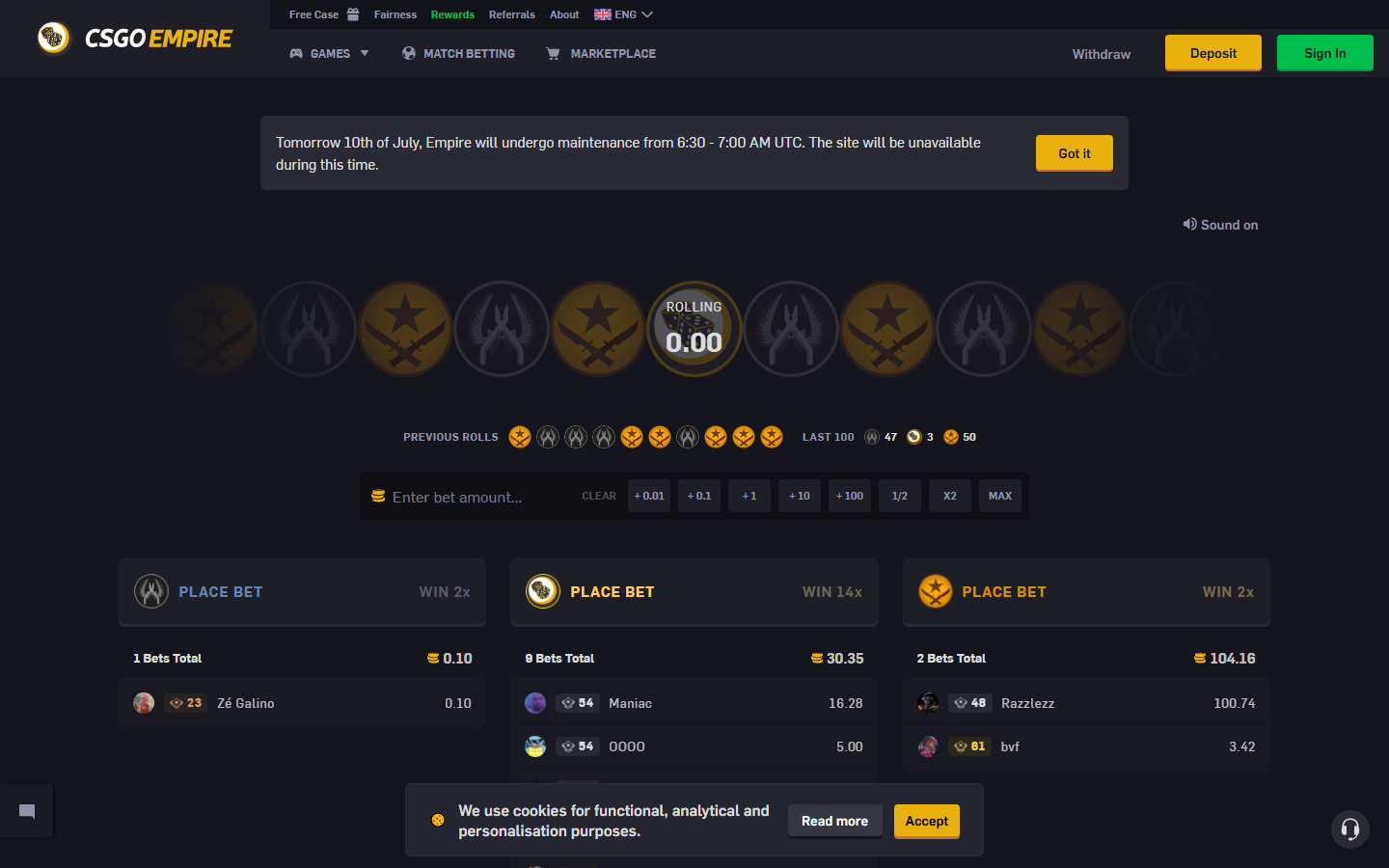
CS2 roulette is the classic entry point: bet on red, black, or green (often styled as CT, T, and bonus) and win a fixed multiple of your wager. Payouts usually run 2x for the common colors and around 14x for green. Check the house edge and whether bonus funds are allowed on roulette before you play.
Case Opening
Site cases work like in-game cases but with custom item pools and, on honest sites, published drop odds. Compare the case price against the expected value of its contents — most cases return less than they cost on average, so treat openings as entertainment, not income.
Case Battles
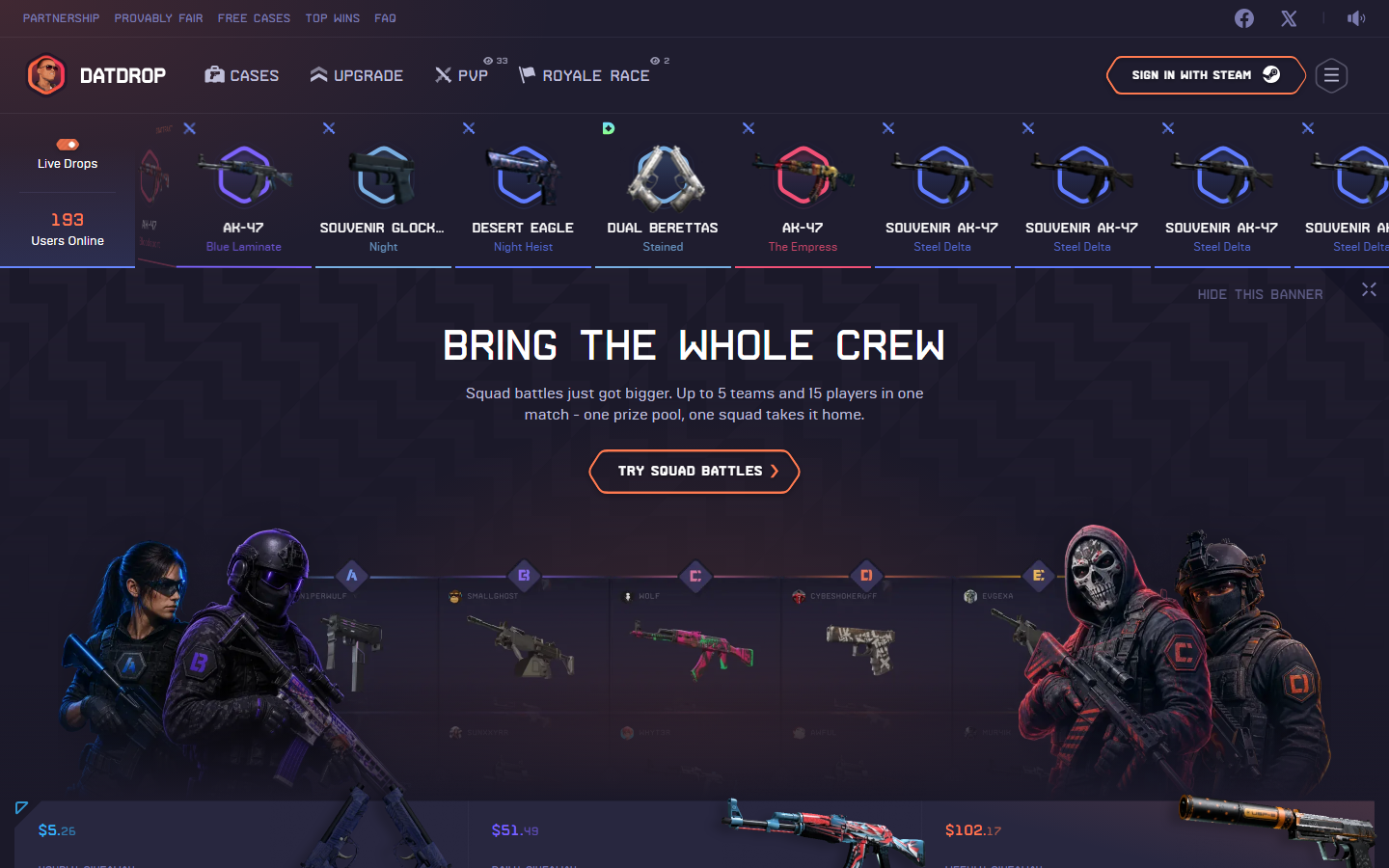
Case battles put two to four players — or teams — against each other opening the same cases at the same time. Everyone pays the case cost up front, and the player who unboxes the highest total value wins every item in the battle. Common formats include 1v1, 1v1v1, and 2v2, plus shared modes that split the pot evenly and "crazy mode," which flips the rules so the lowest total value wins. Winners are decided purely by unboxed item value, so odds transparency matters more here than in any other mode. Before joining, check the fee the site keeps from each battle and whether bots can fill empty player slots.
Crash
A multiplier climbs from 1.00x until it crashes at a random point. Cash out before the crash to lock in your bet times the multiplier; wait too long and the stake is gone. Provably fair verification matters most on crash, where rounds resolve in seconds and volatility is high.
Coinflip
Coinflip is a 50/50 duel: two players stake skins or balance of similar value, and one side takes the whole pot minus the site's cut. It is the easiest game to sanity-check — confirm the fee percentage and make sure each flip publishes a provably fair seed you can verify.
Upgrader
Upgraders let you risk a skin or balance for a chance at a more expensive item. The site shows a win percentage based on the price gap — the bigger the jump, the lower your odds. Verify that the displayed percentage lines up with the provably fair result history before trading up.
What Is CS2 Gambling?
CS2 gambling covers third-party websites where Counter-Strike 2 skins — weapon
finishes, knives, and gloves with real market value — are used as betting chips.
You deposit skins through a Steam trade, or top up with crypto or a card, receive
site credit, and play casino-style games such as roulette, case battles, and crash.
Winnings can usually be withdrawn as skins from the site's inventory or, on some
sites, as cryptocurrency.
Many of these sites still call themselves CSGO gambling sites. Counter-Strike:
Global Offensive became Counter-Strike 2 in 2023, and every CSGO skin carried over
to the new game, so both terms describe the same items and the same gambling scene.
Operators keep the CSGO branding because players still search for it — in practice
there is no difference between a CSGO gambling site and a CS2 gambling site today.
How We Test and Rank CS2 Gambling Sites
Every site goes through the same checklist before it can be ranked on SkinRake. We
deposit and withdraw with real balance to time the cashier and spot hidden trade
holds. We verify provably fair systems by checking published seeds against actual
results instead of taking the badge at face value. We read full bonus terms and flag
wagering requirements, max cashouts, and excluded games. Finally, we check licensing
claims, region restrictions, and community withdrawal complaints. Sites that fail
withdrawal tests or hide their terms do not get listed, whatever their affiliate
deal looks like.
Is CS2 Gambling Safe and Legal?
Legality depends on where you live. Some countries treat skin gambling like any
other online casino product and require a license; others ban it outright or leave
it in a grey area. Most CS2 sites operate under offshore licenses or none at all, so
player protections vary widely — always check your local law, and remember these
sites are for adults aged 18 or older.
"Provably fair" means the site publishes a cryptographic seed before each round so
you can verify the result was not manipulated after your bet. That proves a round
was random — it does not prove the site will pay you. Treat provable fairness as one
trust signal alongside withdrawal history, transparent terms, and
responsible-gambling tools like deposit limits and self-exclusion. If you want to
build an inventory without depositing anything, start with our guide to
earning free skins instead.
Deposits and Withdrawals
CS2 sites typically accept three deposit types: skins sent by Steam trade,
cryptocurrency, and card payments through a third-party processor. Skin deposits are
usually credited slightly below market price, and Steam can hold trades for up to 15
days if the Steam Mobile Authenticator has not been active on your account. If you
would rather play with Bitcoin or other coins, compare our
crypto gambling sites. And when you want to
turn withdrawn skins into cash, sell through a reputable
skin marketplace rather than a private buyer.