 SK
SK
Skinport
Affiliate page
8% seller fee
MarketCashout
Payment Methods
Visa Mastercard
 PayPal
 Apple Pay
 Alipay
 Bank
Bank
MastercardPayPalApple PayAlipayBank
Compare Rust gambling platforms by bonus value, game selection, payment support, and review score. Availability depends on your region.
Every ranked review in one place. Filter by section, then compare bonuses, payment options, and trust signals.
SK
MastercardPayPalApple PayAlipayBank RU
RU
 Rust+2
 CS
CS
 CS2
CS2 BTCBank
 TG
CS2Rust
TG
CS2Rust TF2BTC+5
 RU
CS2RustTF2
RU
CS2RustTF2 TF2 Keys
 Dota 2
 ST
BTC
ST
BTC ETH
ETH LTC
LTC USDT+16
 DM
CS2Dota 2RustTF2+4
DM
CS2Dota 2RustTF2+4 RU
CS2RustTF2Dota 2BTC
RU
CS2RustTF2Dota 2BTC BCH
BCH BNB
BNB ADA+17
 CS
CS2BTCETHLTC+4
CS
CS2BTCETHLTC+4 SH
BTCETHLTC
SH
BTCETHLTC SOL+17
 RU
CS2RustTF2BTCBNBETHLTCSOL+9
RU
CS2RustTF2BTCBNBETHLTCSOL+9 SG
CS2RustTF2BTC+6
SG
CS2RustTF2BTC+6 DU
BTCETHUSDT+4
DU
BTCETHUSDT+4What the big Rust gambling platforms actually look like once you land on them, and how to read a homepage before you ever deposit a skin.
Rust gambling sites cluster into three recognisable archetypes, and knowing which one you are looking at tells you most of what to expect from its games, bonuses, and cashier. The first is the full casino hub: a site built around in-house "originals" like crash, mines, jackpot, and coinflip, usually with slots, live tables, or a sportsbook bolted on. The second is the crate-opening specialist, where the whole product is site-branded cases filled with Rust skins at published odds. The third is the player-versus-player arcade built on jackpot pots, coinflips, and case battles, where the site takes a rake instead of playing against you.
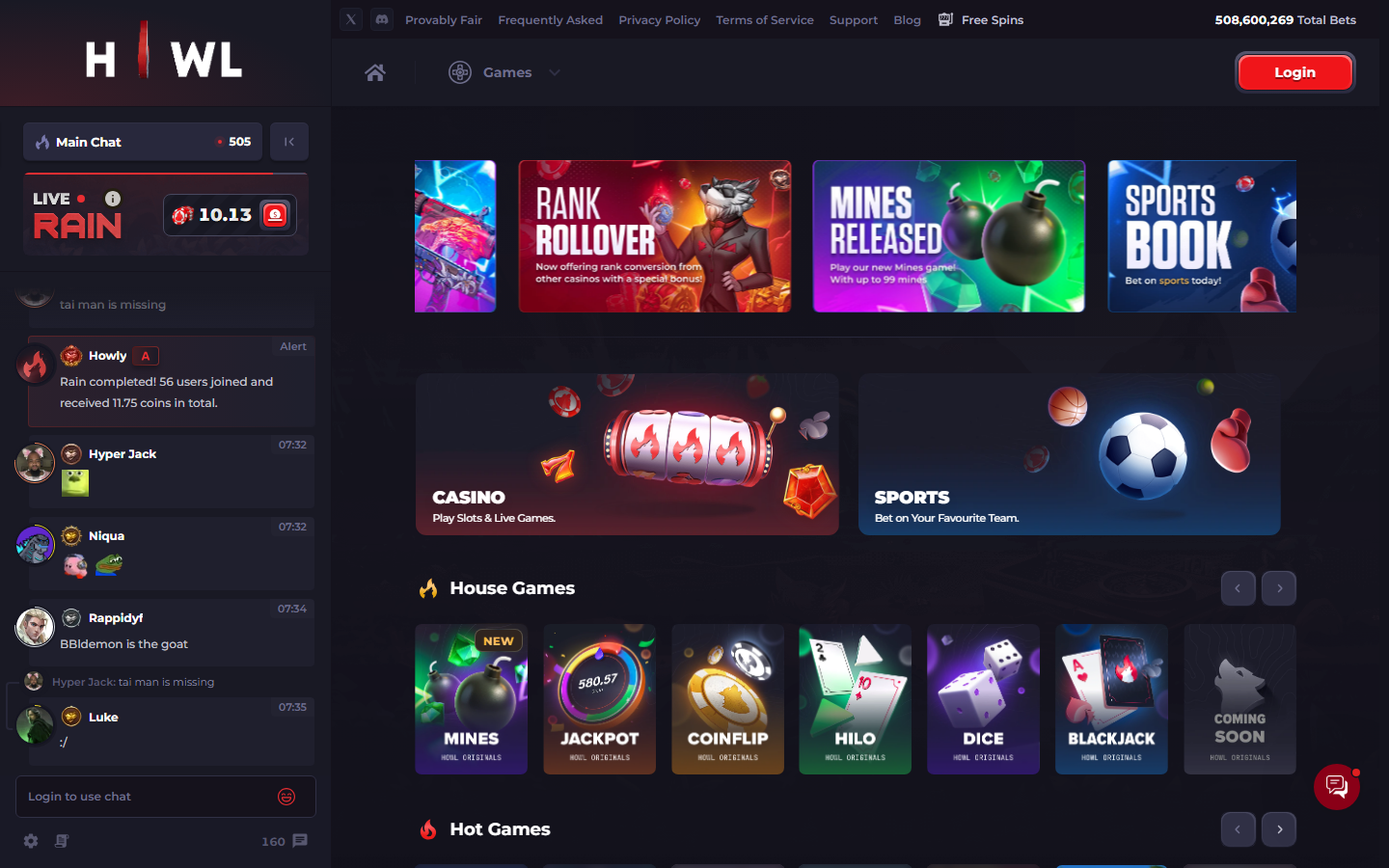
The archetype shapes the risk profile. Full casino hubs spread your play across dozens of games but mix provably fair originals with third-party slots that cannot be seed-verified. Crate specialists live or die on their odds pages and item pricing. PvP arcades shift the fairness question from "is the house cheating" to "is the draw random and what is the rake". Our reviews score each site against the standards of its own archetype rather than pretending one checklist fits all three.
Bandit.camp is the cleanest example of the crate archetype: the homepage is a wall of cases sorted by popularity, each card showing the case price and a small odds bar that previews the value distribution inside. Filters for "high risk", "low risk", and "cheap" sort cases by variance, which is a more honest way to browse than sorting by artwork. Before opening anything on any case site, click through to the case page and confirm every item lists a drop percentage and a value that roughly matches what the skin actually trades for on marketplaces.
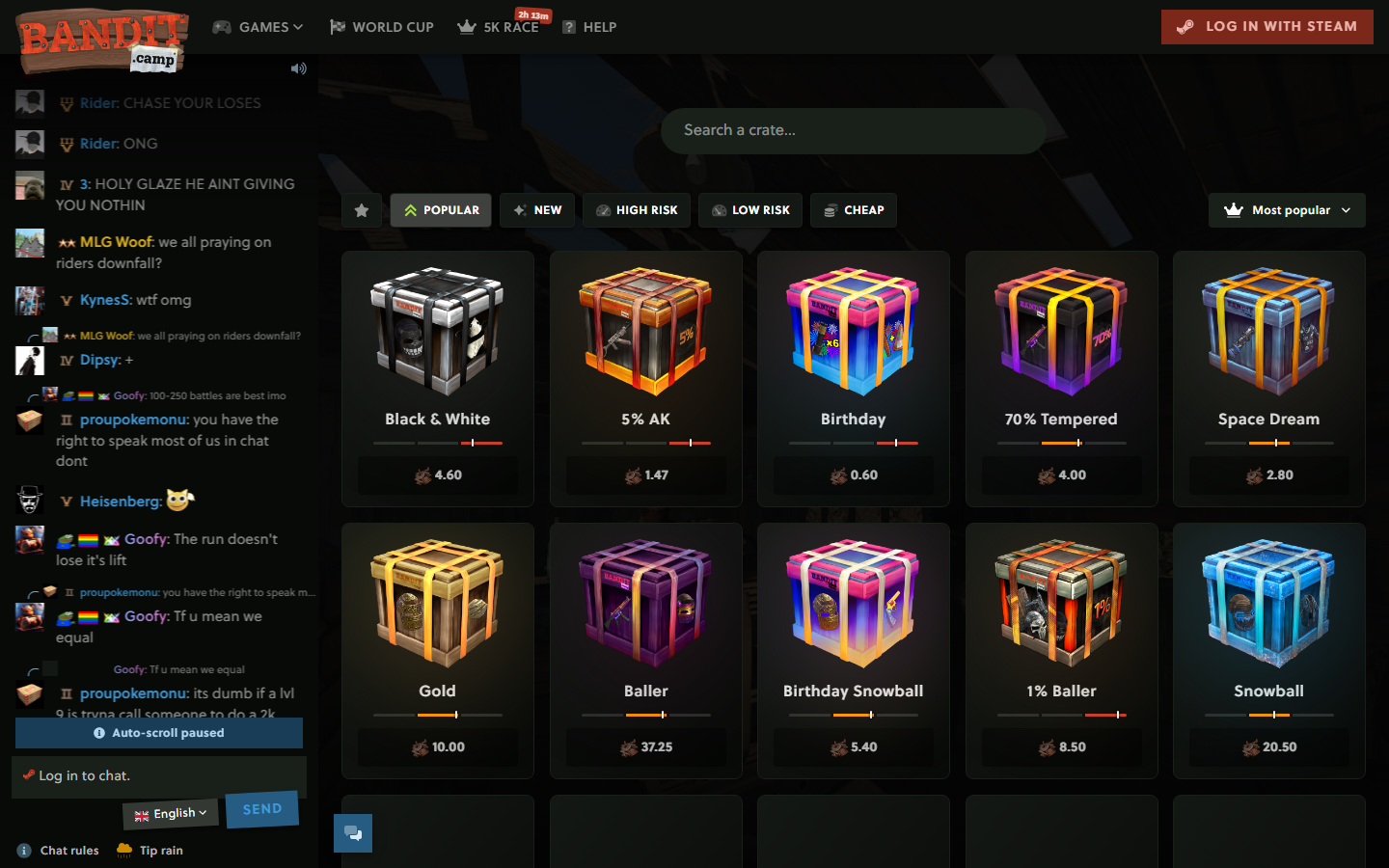
The numbers to compare between crate sites are expected value and item liquidity. A case returning 90 cents of median market value per dollar is materially better than one returning 80, and the only way to know is to check the odds list against real skin prices. Watch for inflated internal item values: a site that prices its top drop 30 percent above market makes every case look more generous than it is. That pricing spread also hits you at deposit time, which is why the same skin can buy different amounts of balance on different sites.
RustMagic leans into the player-versus-player arcade: case battles, upgrader, coinflip-style flipper, mines, and keno, wrapped in a live chat rail with tipping and scheduled "rain" drops that pay out to active chatters. Rain and leaderboard races are engagement mechanics, not free money — the amounts are small and the point is to keep you on-site — but they are also a useful liveness signal. A busy chat, visible rain payouts, and a funded leaderboard tell you the site has real traffic, which matters directly for PvP modes because jackpot pots and battles need opponents.
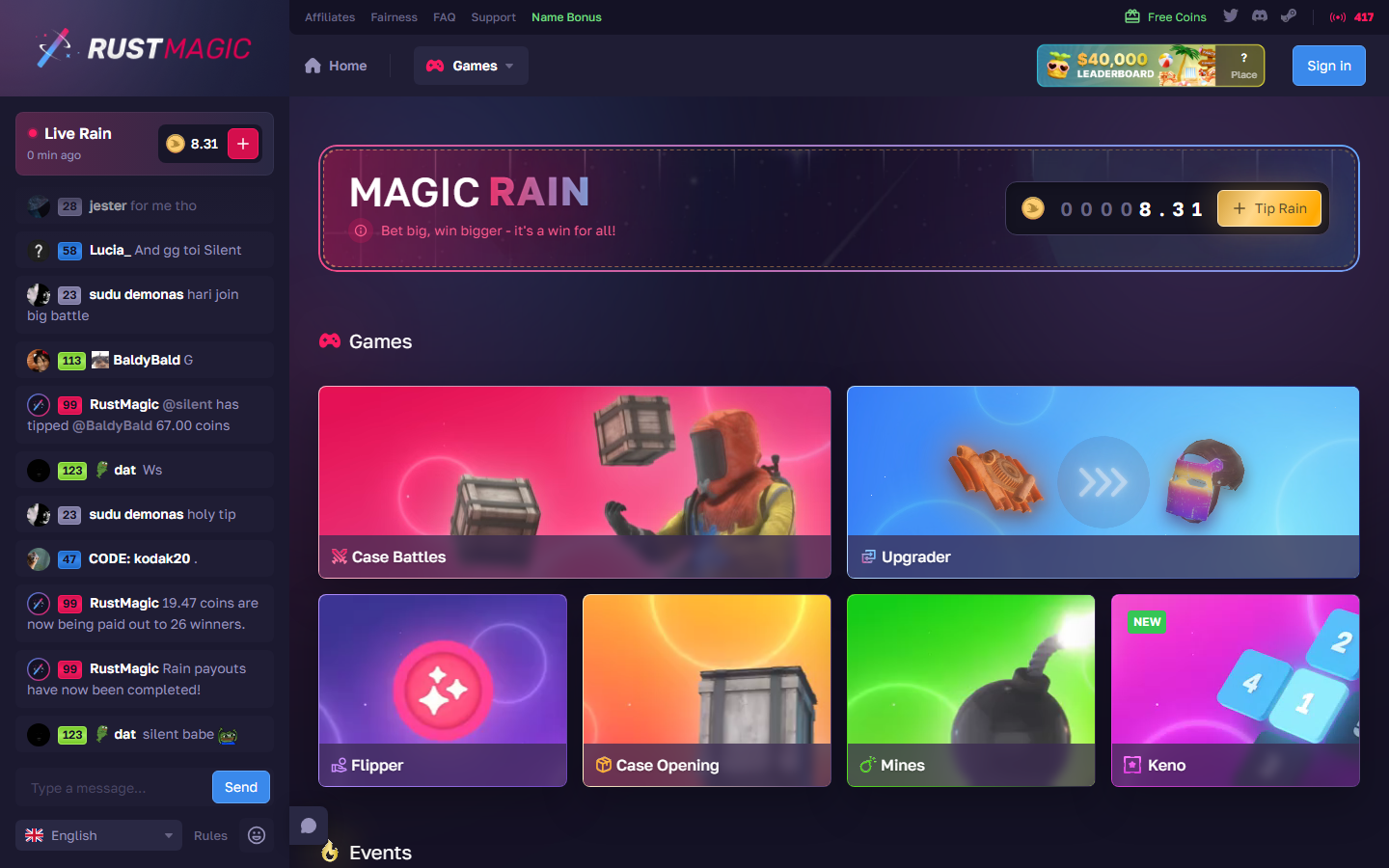
Chat is also where promo-code culture lives. Most Rust gambling sites hand streamers and creators referral codes that grant new players free coins or cases, and you will see codes spammed in chat and plastered across YouTube thumbnails. A code changing your bonus is normal; a code being the only documented way to learn about a site's terms is not. Treat creator codes as a small discount on entertainment you already decided to buy, never as evidence that a site is trustworthy — the biggest sponsorship budgets and the best payout records are not the same list.
Jackpot is the purest expression of Rust PvP gambling, and RustyPot — the longest-running jackpot-and-coinflip specialist — shows exactly what an honest pot looks like while it fills. Every deposited item is listed with its dollar value and the depositor's percentage chance, the pot timer and item cap are visible, and each completed game publishes the winning ticket number so the draw can be checked against the provably fair seed. If a jackpot site will not show you item values, percentages, and tickets at this level of detail, you cannot know what you are buying into.
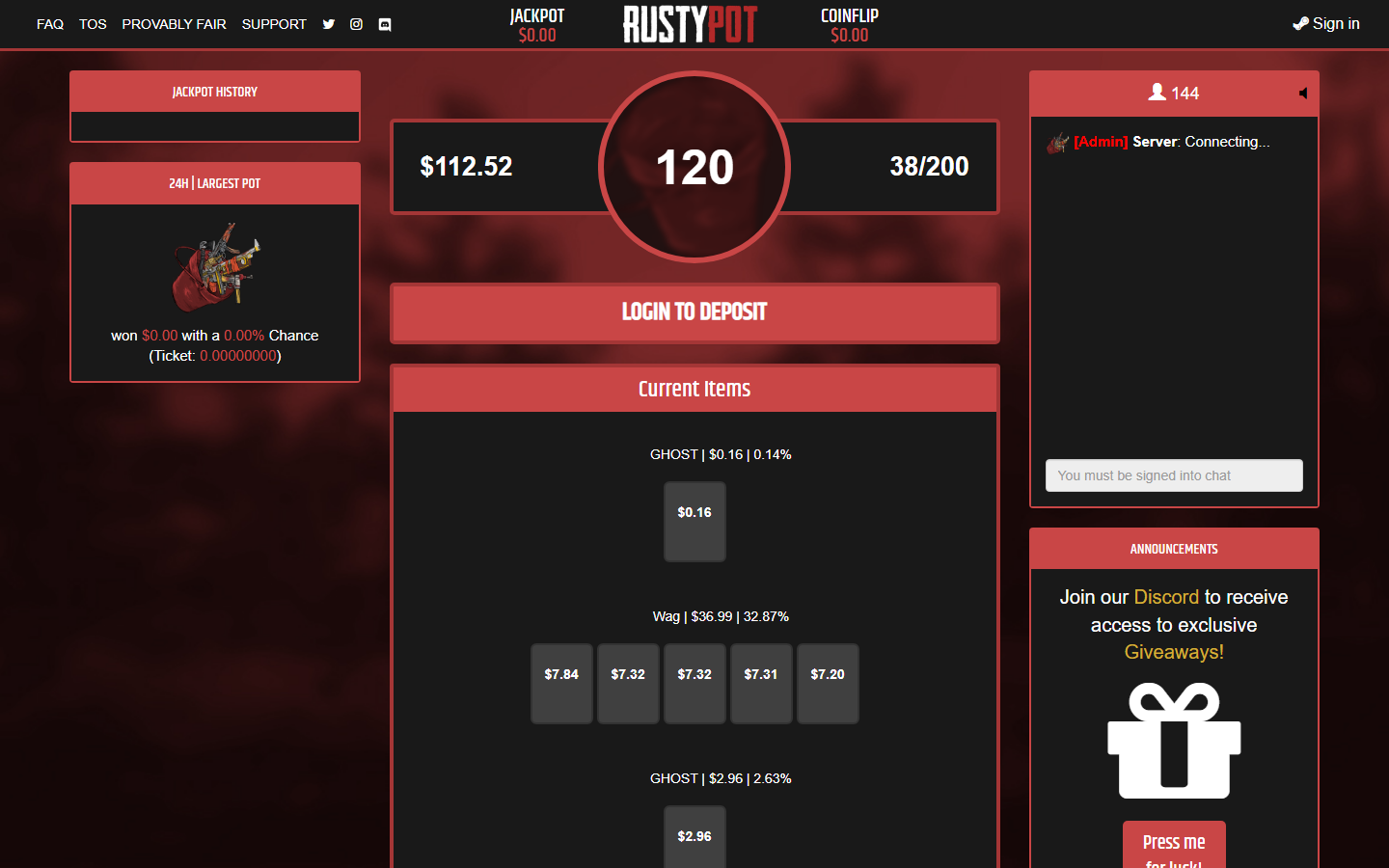
The other number to find is the rake — the percentage of each pot the site keeps. Rakes in the 5 to 10 percent range are typical; anything undisclosed is a red flag regardless of how fair the draw is. And because jackpot odds equal your share of the pot, the "value" of a pot depends on who else is in it: sniping a nearly-full pot with a small deposit does not change your expected return, but it does cap your downside to a known amount, which is why experienced jackpot players watch the timer as closely as the odds.
Every archetype shares one non-negotiable: a working provably fair page for house-run games. The standard implementation shows you a hash of the server seed before you bet, lets you set or rotate your own client seed, and increments a nonce per bet so you can recompute any historical roll and confirm the site could not have changed the outcome after seeing your wager. RustyLoot's fairness panel below is what a complete implementation looks like — seed fields exposed, not buried in a help article.
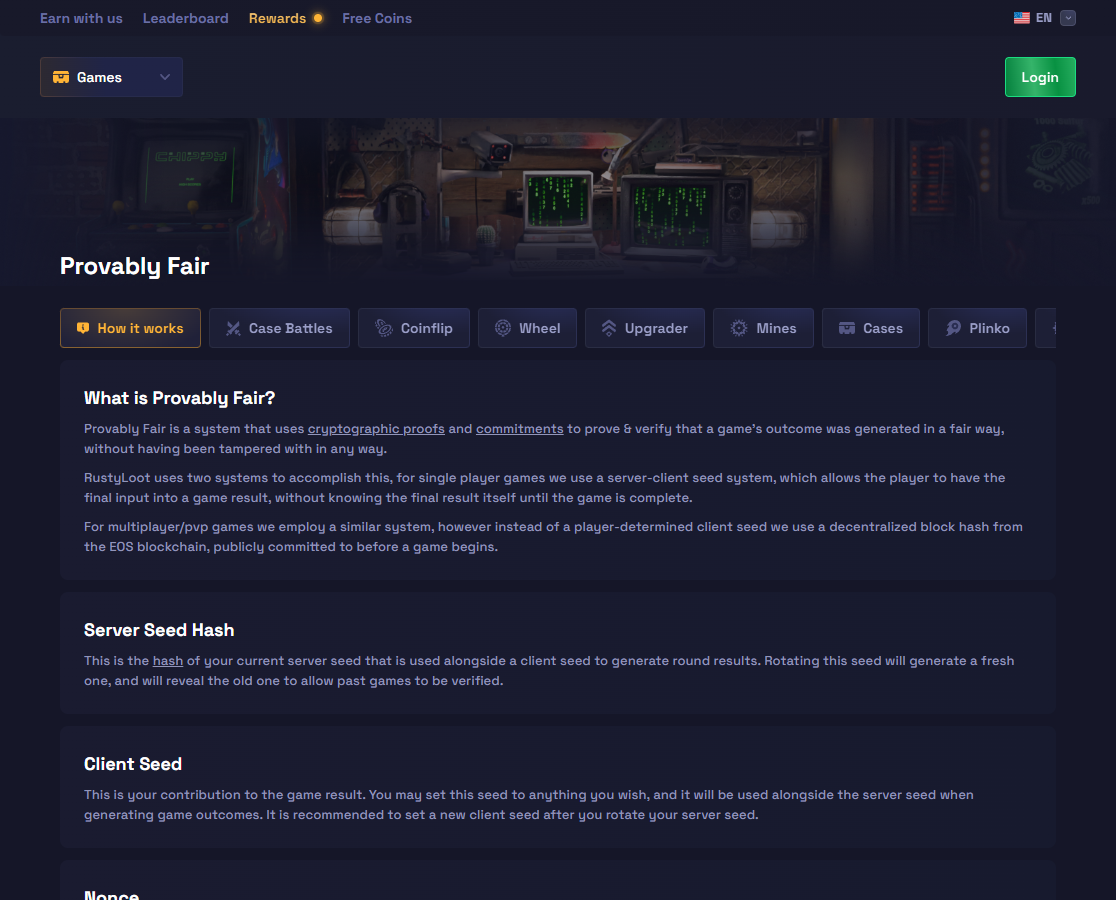
When we grade fairness we test three things: the server seed hash is visible before betting, the client seed is editable at will, and the verification algorithm is documented well enough to reproduce in an independent calculator. "Provably fair" printed in a footer with no seeds, no nonce, and no docs earns nothing. And remember the limits of the guarantee: seeds prove the roll was random, not that the site will stock its withdrawal inventory or answer support tickets.
Levelled reward programs are now standard across Rust sites: wager volume raises your level, levels unlock daily cases and rakeback tiers, and rakeback returns a slice of the house edge on every bet. For a high-volume player, the difference between 5 and 10 percent effective rakeback is real money; for an occasional player it is a rounding error. Read reward pages the way you would read bonus terms — what unlocks at which wager volume, whether daily rewards expire, and whether "free" case winnings carry their own wagering requirements before withdrawal.
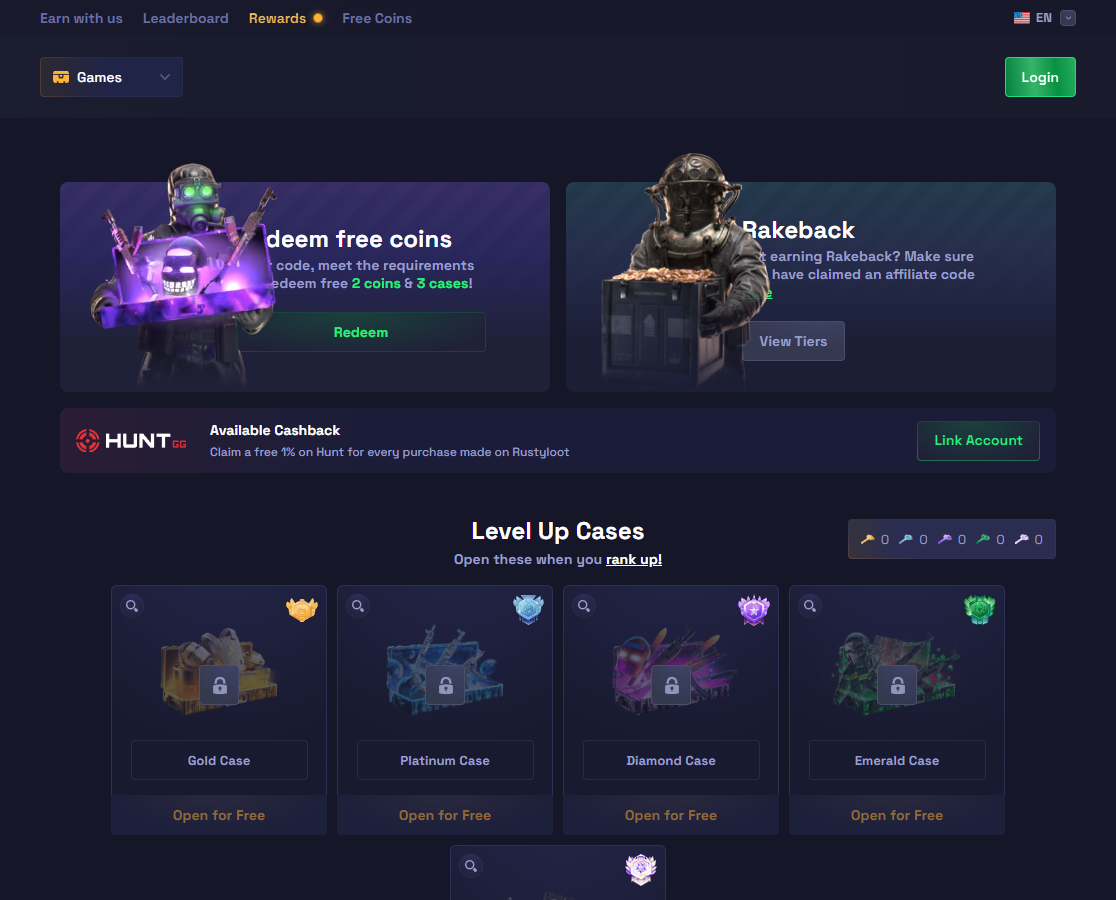
One honest framing to keep: every reward program is funded by house edge. Rakeback, rain, daily cases, and leaderboard prizes are partial refunds on money the math already expects you to lose. That does not make them worthless — if you are going to play anyway, collect them — but it means "which site pays me the most to gamble" is the wrong first question. Withdrawal reliability, fair odds, and honest pricing are worth more than any loyalty ladder, and that ordering is baked into how the scores above are weighted.
Everything on these sites ultimately prices back to the Rust item market. Skins are tradable Steam items with real market prices, and gambling sites act as unofficial currency exchanges: they buy your skins below market at deposit, denominate your play in coins or gems, and sell you skins back at withdrawal from whatever inventory other players have deposited. Popular items vanish from withdrawal stock right after big wins, and Steam-side trade holds add delay on top. If your goal is cashing out to real money rather than playing, a skin marketplace or trading bot will almost always beat gambling-site pricing.
That is the honest context for everything ranked on this page. Rust gambling can be entertaining, some operators run it with published odds, verifiable rolls, and deep withdrawal inventories, and the reviews above exist to separate those from the rest. But the house edge is real on every site, variance at battle stakes is brutal, and no rakeback ladder changes the direction of the math. Set a budget before your first deposit, use the deposit limits and self-exclusion tools the better sites provide, and read the full review before you send the first trade offer.
Rust skin gambling sites let you stake in-game items or supported currencies on games such as case openings, roulette, crash, case battles, coinflip, and jackpot. The scene has matured: the better operators now publish provably fair systems, list game odds, and support both skin and crypto payments, while weaker sites still bury their terms and pay out slowly. That gap is exactly what this page is for.
Every site in the ranked list above is scored on the same checklist: bonus terms we could actually read, withdrawal behaviour reported by real users, published odds, and region restrictions. Use the filters to narrow the list to the game mode you care about, then open the full review before you deposit. Availability depends on where you live, and none of these sites are affiliated with Facepunch or Steam. Gamble only if you are of legal age in your region, and never stake more than you can afford to lose.
A multiplier climbs from 1x until it randomly crashes. Cash out before the crash to lock in your bet times the multiplier. It is fast and volatile, so set a target and stick to it instead of chasing bigger multipliers.
Rust roulette usually offers two or three colour bands plus a high-payout bonus slot. Payouts, house edge, and max bets differ between sites, so compare the wheel layout and table limits before betting skins or balance.
Open site-branded cases filled with Rust skins at listed odds. Look for visible drop rates and realistic item pricing, because a case is only worth opening when the odds page and the item values both check out.
Two or more players open identical cases and the highest total unboxed value wins the pot. Check player counts, team modes, fees, and special rules like crazy mode, where the lowest total wins instead.
A head-to-head 50/50 where two players stake skins or balance of similar value and a provably fair flip decides the winner. Check how the site balances value differences and whether you can verify each flip result.
Players deposit skins into a shared pot and a winner is drawn with odds proportional to each entry. Bigger deposits mean better odds but bigger losses. Look for clear pot fees and verifiable draws before joining.
Trade a lower-value skin or balance for a chance at a more expensive item. The displayed win chance scales with the value gap. Verify how the site calculates that chance and whether outcomes are provably fair.
Drop a ball down a pegboard and win the multiplier of the slot it lands in. Risk settings and row counts change the payout spread. It is a casino-style game offered alongside skin modes on many Rust sites.
Reveal tiles on a grid while avoiding hidden mines. Each safe pick raises your multiplier, and you can cash out at any time. Adding more mines raises the payouts but sharply increases the chance of losing the bet.
Small balance credits for creating an account or linking Steam, often a dollar or two. They let you test a site without depositing, but usually carry wagering requirements and withdrawal minimums, so read the terms before treating them as free money.
Some sites hand out free cases at sign-up or as level rewards. Values are usually low and winnings often need to be wagered before withdrawal. Check whether the case odds are published and what the cashout rules are.
Codes entered at sign-up or in your account settings that unlock credits, cases, or deposit boosts. Terms differ per code, so confirm the wagering requirement, expiry date, and any max cashout before you redeem one.
A percentage boost on the value you deposit, such as extra balance on a skin or crypto deposit. Check the wagering multiplier, which games count toward it, and whether bonus funds are held apart from your withdrawable balance.
Ongoing rewards that return a share of the house edge on your bets, plus daily or level-based bonuses. Useful for regular players, but rakeback never turns a losing game profitable, so treat it as a discount rather than income.
Every score on this page comes from the same checklist. We do not repeat operator marketing claims; we look for evidence in four areas before a site earns its position in the list.
We check where a site says it can accept players, what license it claims, and whether that claim can be traced, so you know its regulatory footing before you deposit.
We look for proof that withdrawals actually work: payout speed reports, failed trade complaints, support response times, crypto fees, and how well the skin inventory stays stocked.
We read the bonus terms so you do not have to: wagering requirements, max cashout, expiry, excluded games, and whether an offer needs a deposit or is genuinely free.
We check for deposit limits, timeouts, self-exclusion, age checks, and clear risk warnings. Sites that make it easy to set limits rank better than sites that hide them.
Start with provably fair verification: a trustworthy site explains how its outcomes are generated and lets you check past rounds with server and client seeds. Next, look for licensing information in the footer or terms, and be cautious when a site names no regulator at all. Withdrawal behaviour is the strongest trust signal, so scan recent community feedback for stuck trades or empty payout inventories before you deposit. Test support with a simple question and note how quickly and clearly it responds. Finally, weigh long-term community reputation over giveaway hype: sites with years of consistent payout reports are safer picks than heavily promoted newcomers. Set a budget before you start, and if gambling stops being fun, use the site's self-exclusion tools and step away.
Most Rust gambling sites follow the same flow. You sign in through Steam, set your inventory to public, and add your trade URL so the site's bots can send trade offers. To deposit, you select skins from your inventory and the site converts them to coins or balance at its own valuation, which is often below Steam market price, so compare rates before you accept. Many sites also take crypto or card deposits. To withdraw, you exchange balance for skins in the site's stock or, on some sites, for cryptocurrency. Confirm every trade offer inside the Steam client, double-check the bot's details to avoid impersonation scams, and never share your login credentials. Withdrawal options, minimums, and speeds vary by site, so check the individual review first. You must be 18 or older, or the legal gambling age in your region, to play.